
Why Georgians Invite You into Their Home the Moment They Meet You
For many visitors, this experience comes as a surprise: you meet someone in Georgia for the first time, exchange a short conversation, and suddenly hear the words, “You must come to my place.” In many countries, an invitation like this would feel too personal or even uncomfortable.
In Georgian society, inviting someone into your home is not a formal event or a polite promise that may never happen. It is a genuine gesture that reflects openness, warmth, and respect.
How Georgia Differs from Other Countries
In many parts of the world, home is seen as a protected personal zone. People prefer to meet in public spaces such as cafes or restaurants, and social interactions tend to be carefully planned. Georgia follows a different approach. If you plan anything two weeks in advance, it does not mean anything – you still have to replan not only several days in advance, but also confirm the day of the meeting, because what if something unexpected comes up and the meeting gets postponed? Also, homes are central to social life. It is common for neighbors to stop by without warning, for friends to stay long into the night, and for visitors to be treated like family members. This openness does not mean that Georgians lack personal boundaries. Instead, it reflects a cultural priority: human relationships are valued more than formality or distance.
“A Guest Comes from God”
One of the most well-known Georgian sayings is “A guest comes from God.” This expression perfectly captures the Georgian attitude toward hospitality – a guest is not simply a visitor but a blessing, someone who deserves care and honor.
Because of this belief, hosts go out of their way to make guests feel comfortable. They prepare generous meals and pay close attention to every detail (you’d be surprised how closely your food intake is monitored and how miraculously your cup is filled). Often, the host places the guest’s comfort above their own, seeing it as both a responsibility and a privilege.
Historical Roots of Georgian Hospitality
How did that saying come to life? In fact, Georgian hospitality was shaped by geography, history, and centuries of survival. For example, historically, Georgia has always been located at a strategic crossroads between Europe and Asia. For thousands of years, traders, travelers, diplomats, soldiers, and pilgrims passed through its territory along major trade routes. In earlier times, travel was dangerous and exhausting, inns were rare, and strangers often depended on local households for shelter, food, and safety. Welcoming travelers was not just kindness—it was a necessity for survival and mutual trust. Today’s instinctive invitations to one’s home are a cultural echo of those times.
Additionally, much of Georgia is mountainous, with remote villages separated by difficult terrain. Historically, communities relied heavily on one another, especially during harsh winters or periods of isolation. Offering food and shelter to a guest—whether known or unknown—was part of an unwritten social contract. You helped others, knowing that, one day, you or your family might need the same help. Hospitality became a form of social security long before modern systems existed.
During the numerous wars that plagued Georgia, welcoming a guest into the home was a powerful act of trust. Protecting a guest was considered an honor, sometimes even above protecting oneself. This belief reinforced the idea that a guest was sacred and must not be harmed.
Finally, in traditional Georgian society, a family’s reputation mattered deeply. Being known as generous hosts increased social standing, while refusing a guest brought shame. Hospitality was therefore tied to honor and dignity. Hosting well was a reflection of one’s character, not one’s wealth. Even poor families would offer their best food to a guest.
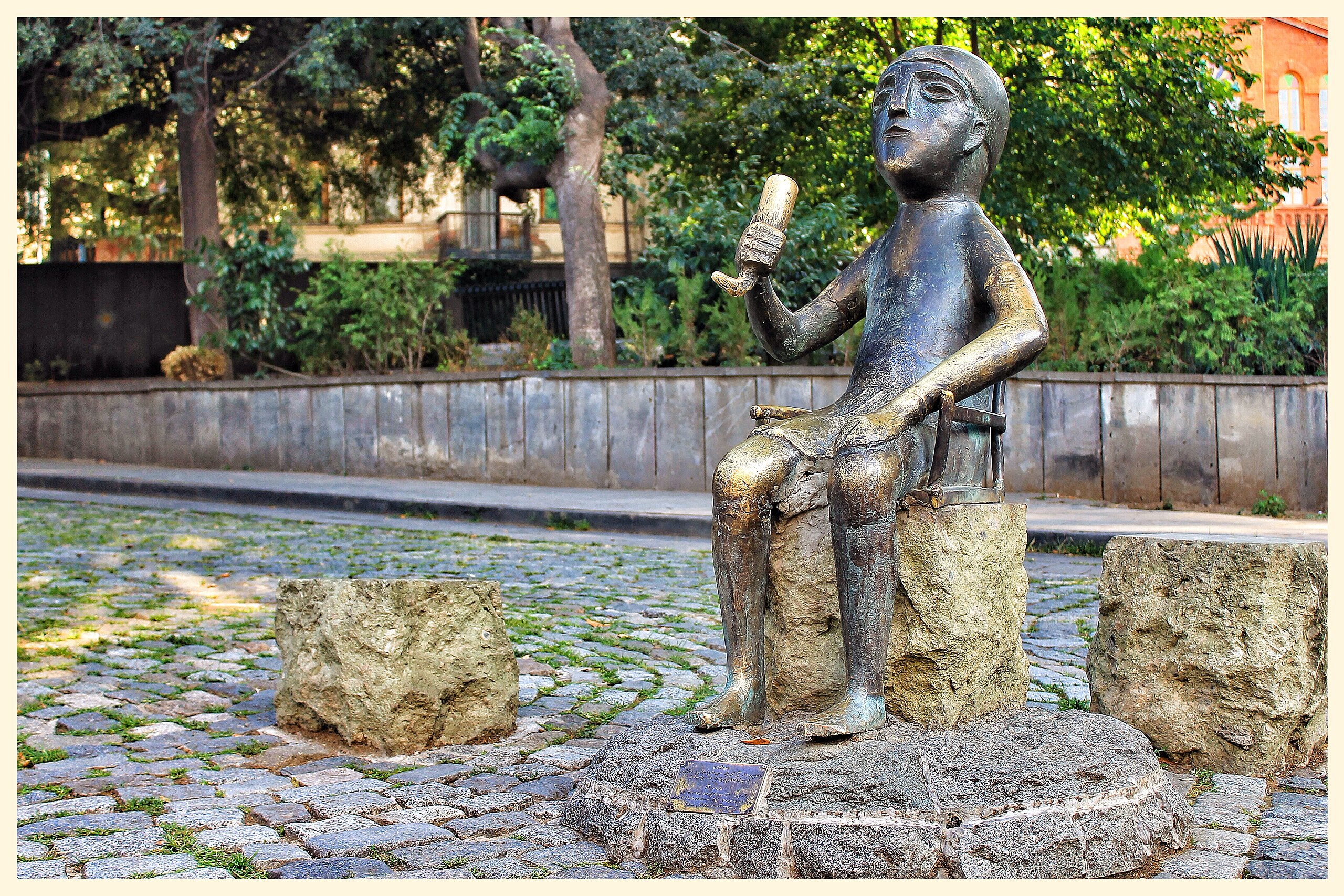
The sculpture of a man holding a horn in Tbilisi modeled on an ancient Colchian statuette affectionately monikered as “tamada”.Wikipedia
The Georgian Supra: A Cultural Experience
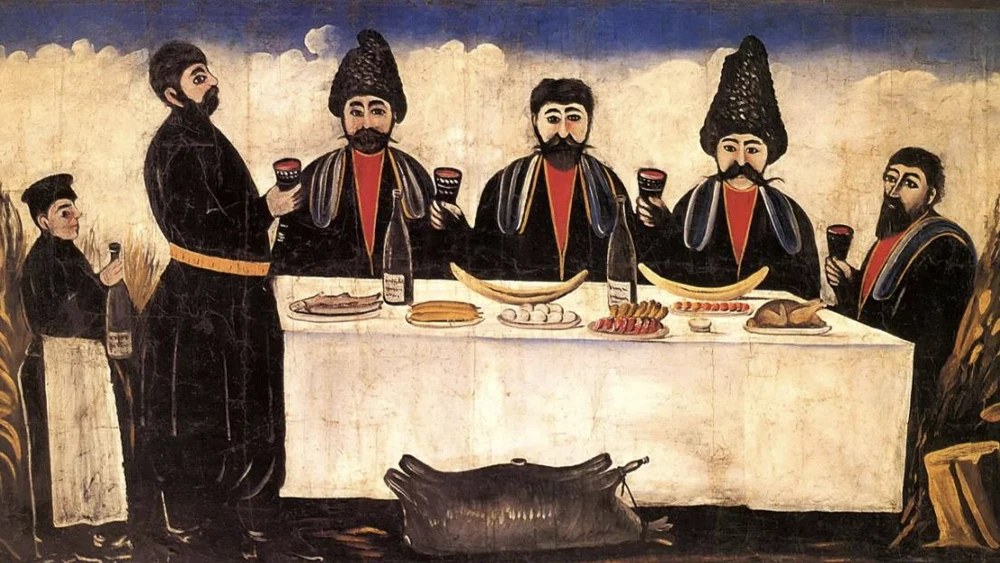
Georgian hospitality is closely tied to the tradition of the supra, a Georgian feast. While food plays an important role, a Supra is about far more than eating. It is a meaningful social ritual that brings people together.
At the heart of the supra is the Tamada, the toastmaster who guides the gathering with carefully chosen toasts. These toasts can be about life, peace, friendship, family, love, motherland, and important people or occasions.
A good Tamada includes everyone, so they will name categories that cover people sitting at the table. For example, a toast to parents would honor parents who are present at the table, and in their name, honor everyone else’s parents. A toast to friends will honor friends who have joined the supra, etc. A special guest is often toasted separately. Some Supras follow a set order of toasts, while some are creative and jazz around people sitting at the table and events that are significant at that time. Most likely, the toast to the hosts is the last one and signals that the Supra is over (another sign that the feast is headed towards the end is that the endless courses of meals are replaced with fruit, desserts, and coffee/tea).
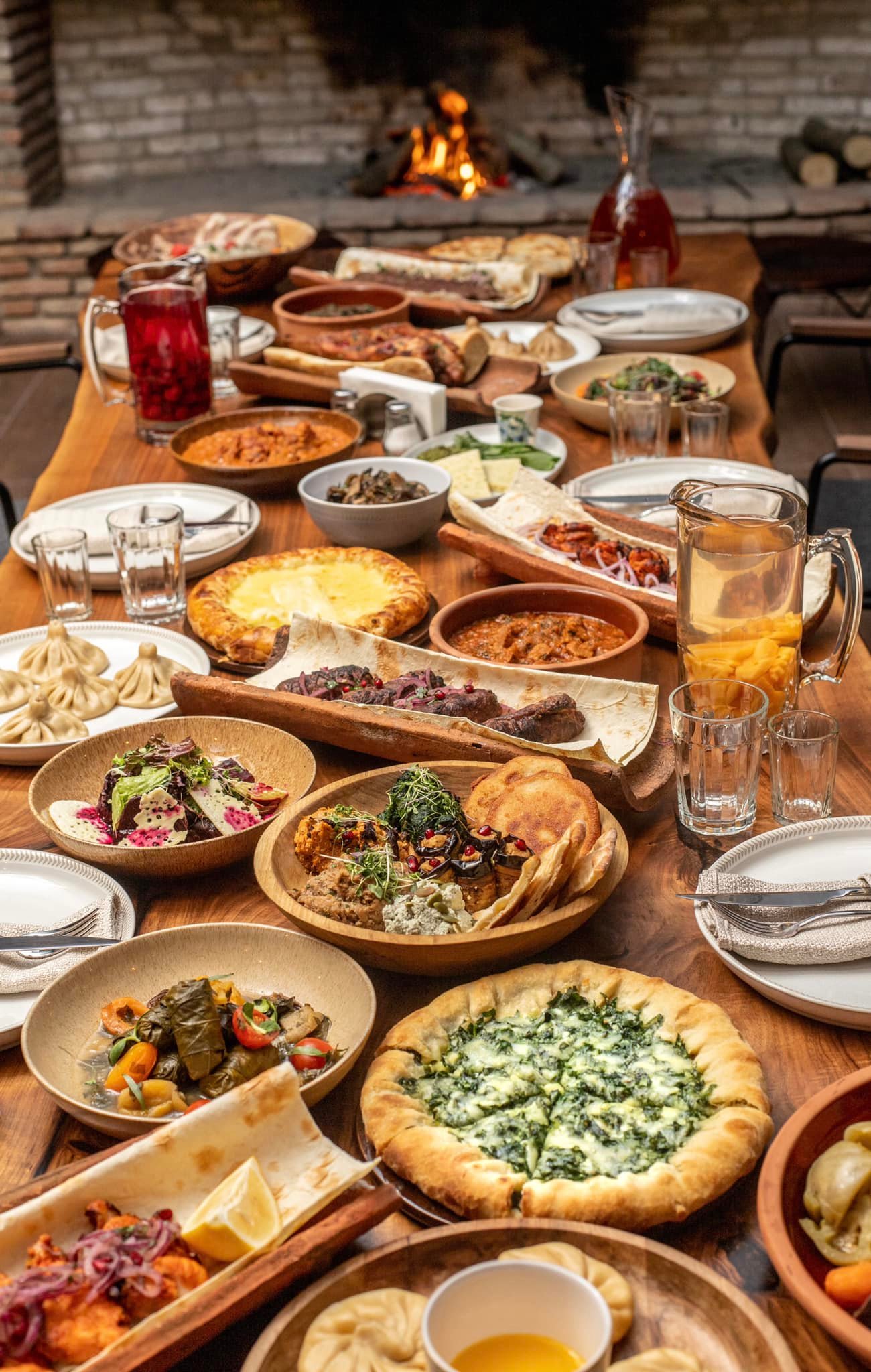
Photo by Dergi
Please be advised that no one just sips alcohol at a traditional Supra, but guests drink only to the toast named by the Tamada.Usually, Tamada proposes a toast, and then guests add a sentence or two about the topic – it does not mean that everyone is voicing a different toast, it means that instead of saying “cheers”, guests take turns to express their thoughts around the proposed toast and drink one cup per toast.
Supra can take a long time, from a quick, two-hour dinner to a whole night affair, with multiple courses and infinite toasts. So, if you are invited to a Supra, be prepared that it will probably take most of your evening. You might arrive for tea and leave after hours of food, wine, stories, and insistence on staying overnight.
Cities Vs. Rural Areas
In villages, hospitality is stronger, more immediate, and more unavoidable. Invitations in rural areas happen instantly — often within minutes of meeting. Be advised that saying “no” to food can genuinely confuse or worry the host, and you may feel like your private space is invaded: I have had hosts place pieces of food on my plate despite my protests. Guests are often treated like long-lost relatives, not visitors. Speaking of the relatives, if you are invited to a supra in a rural area, most likely a whole army of relatives and neighbors will join the feast, usually uninvited. Privacy in the villages is looser, and community life is deeply intertwined.
The reason for such openness is that villages depended on mutual survival much more than the cities, which had inns, taverns, and infrastructure. Additionally, fewer outsiders meant every guest was important and memorable. If you walk through a Georgian village, especially a less touristy one, everyone will notice you, and in half an hour, the whole population will be aware that a foreigner is walking in their streets. Culturally, social life centers around the home, not cafes or public spaces. In such a close-knit community, generosity reflects honor, not wealth — modest households give their best, and if the family lacks produce or wine, the neighbors will help out, not only by providing the food, but also by helping with cooking and cleaning.
In cities like Tbilisi, Batumi, or Kutaisi, hospitality exists as well — but it adapts to the modern urban life. Firstly, our lives are much more scheduled, depending on our jobs, kids’ schools, and other daily routines. Secondly, most of us live in apartments, and that brings a whole other set of rules and behaviors – if village houses usually have a spare room or two, city apartments are usually more packed. Finally, there are plenty of hotels, so guests may choose not to stay overnight, especially if the apartment is small. Hence, in the cities, invitations are still genuine, but sometimes less immediate. City hosts may say, “Let’s plan dinner sometime,” and actually mean it — but with some coordination. There is also more awareness of personal boundaries.
What Tourists Should Know When Visiting a Georgian Home
If you are traveling in Georgia and someone invites you into their home, it is best to accept the invitation with confidence. It is almost always offered with genuine goodwill. A few simple guidelines can help visitors feel more comfortable:
- Bringing a small gift is appreciated and, in the cities, even expected (especially if there are children in the house): desserts, chocolate, candies for the little ones, fruit, juice, or ice cream are all thoughtful choices. Even if the visit is unplanned and the hosts are accompanying you to their house, just stop at the market on some pretext and get anything – the gift does not have to be expensive, rather symbolic, so that you don’t visit empty-handed.
- Show some interest in Georgian traditions, dishes, and traditions—this is always warmly received. (4)
- Do not feel shy about eating or drinking; offers are meant sincerely.
- Careful, if your cup is empty, hosts will instantly refill it with alcohol, as it is considered rude to let your guests sit with an empty cup. If you don’t want to drink much, take a few sips per toast.
- Be prepared for many courses and don’t overindulge in the beginning; there is more to come, and you will be pressured to try everything.
- If you have any dietary restrictions, please take extra time and patience to explain when you are offered a dish, especially in the villages where the whole community eats seasonally, nothing goes to waste, and not eating specific foods is more of a city life privilege.
Photo by Dergi
The Real Beauty of Georgia
Georgia is often admired for its dramatic landscapes, historic cities, and diverse nature. But its greatest beauty cannot be captured in photographs. It exists in the people—their generosity, warmth, and willingness to welcome others into their lives.
When a Georgian invite you into their home shortly after meeting you, they are doing more than offering hospitality. They are sharing a piece of their world. And it is within that shared space—around a table, through conversation, and in genuine human connection—that the true spirit of Georgia is revealed.
We created Memo — a brand where Georgian memories come to life.
Visit Memo By GSH and take a piece of Georgia with you – Www.memories.ge