
Palaces of Georgia
Palaces are almost magical in their essence. They remind us of times when royals and nobles lived surrounded by beauty, dwelled in architecturally distinct buildings, strolled in lush gardens, wore exquisite jewelry, and enjoyed precious works of art. Whether you have a whole weekend for exploring regions or just a free afternoon for a quick visit to a palace-turned-museum in Tbilisi, you can get enchanted in several estates situated all over the country.
The Agrippina Japaridze Palace
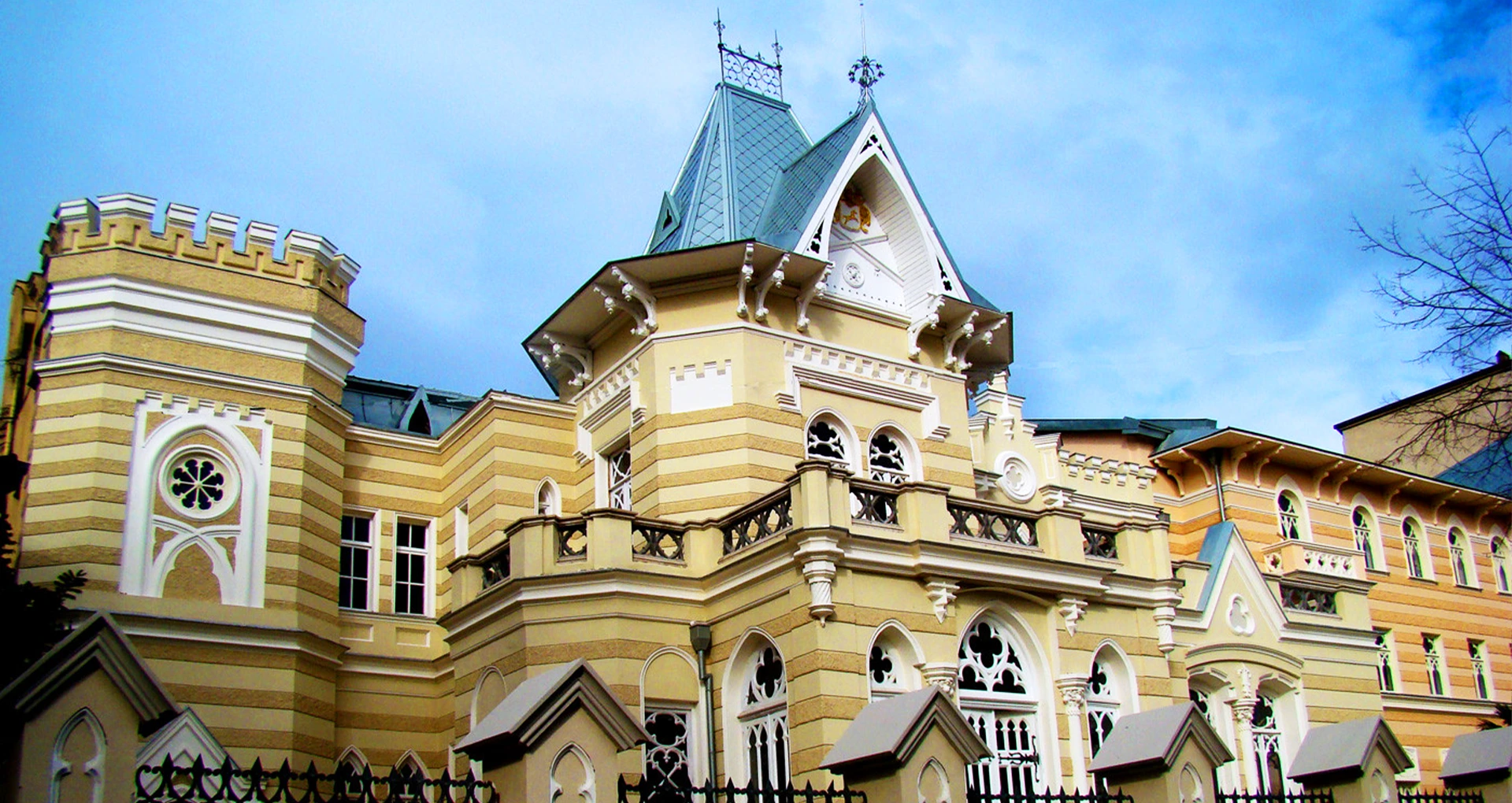
This romantic palace is known as the Art Palace of Georgia and Museum of Cultural History. It is located on a small, lovely historic Kargareteli Street in Tbilisi, which deserves a stroll of its own. The palace is not a grand, opulent noble residence, rather it was built as a love gift and hence is nicknamed a palace of love.
It was constructed in the 19th century by Duke Konstantin of Oldenburg for his wife Agrippina (pronounced Agrapina in Georgian), a prominent Georgian aristocrat, socialite, and philanthropist.
Agrippina was a controversial lady at the time, meddling in royal love affairs and marrying twice, first time to the Dadiani Prince and second time to the Russian imperial figure.
The architecture of this museum presents a unique mix of Gothic and Islamic styles, with ornamented arches, facades, and colors. Currently, it houses the Museum of Cultural History of Tbilisi, displaying important items from theater, music, cinema, and choreography.
It provides an excellent chance for you to enjoy hand-crafted stage costumes, set designs, posters, and other applied arts.
Museum hours: 10:30–17:30
Orbeliani Palace
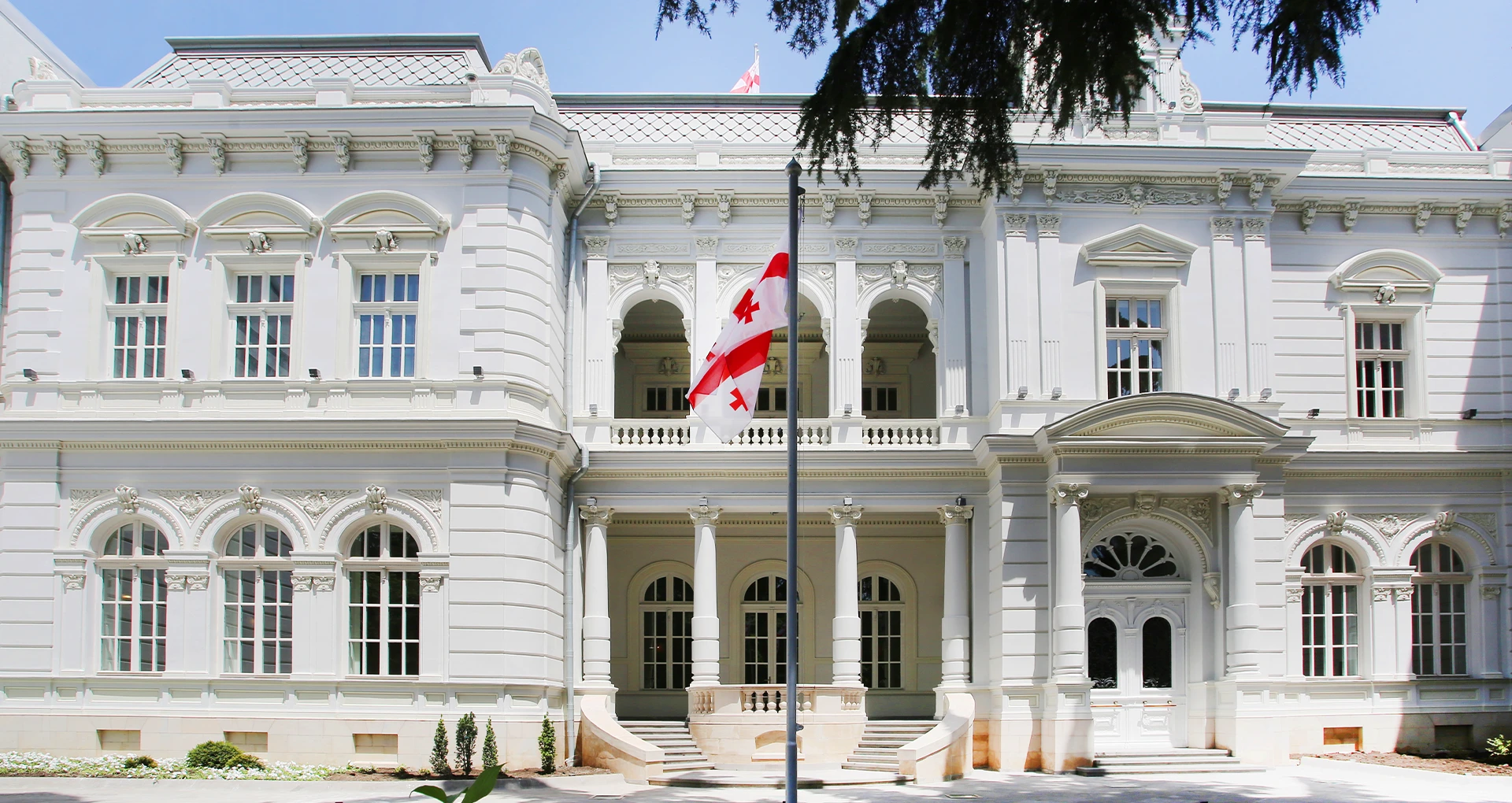
If you’re wandering around historic sites in Tbilisi, you’re bound to stumble across this little gem on Orbeliani Square. The historic building dates back to the 19th century. It used to belong to the noble Orbeliani family, including Grigol Orbeliani, a well-known poet, and Elizabeth Orbeliani, the first female professor in Georgia.
The palace has an interesting historical past: it used to host the U.S. embassy and is an official presidential residence. It is encircled by numerous cafes, tourist destinations, and a famous flea market on the nearby dry bridge.
Romanov Palace in Likani
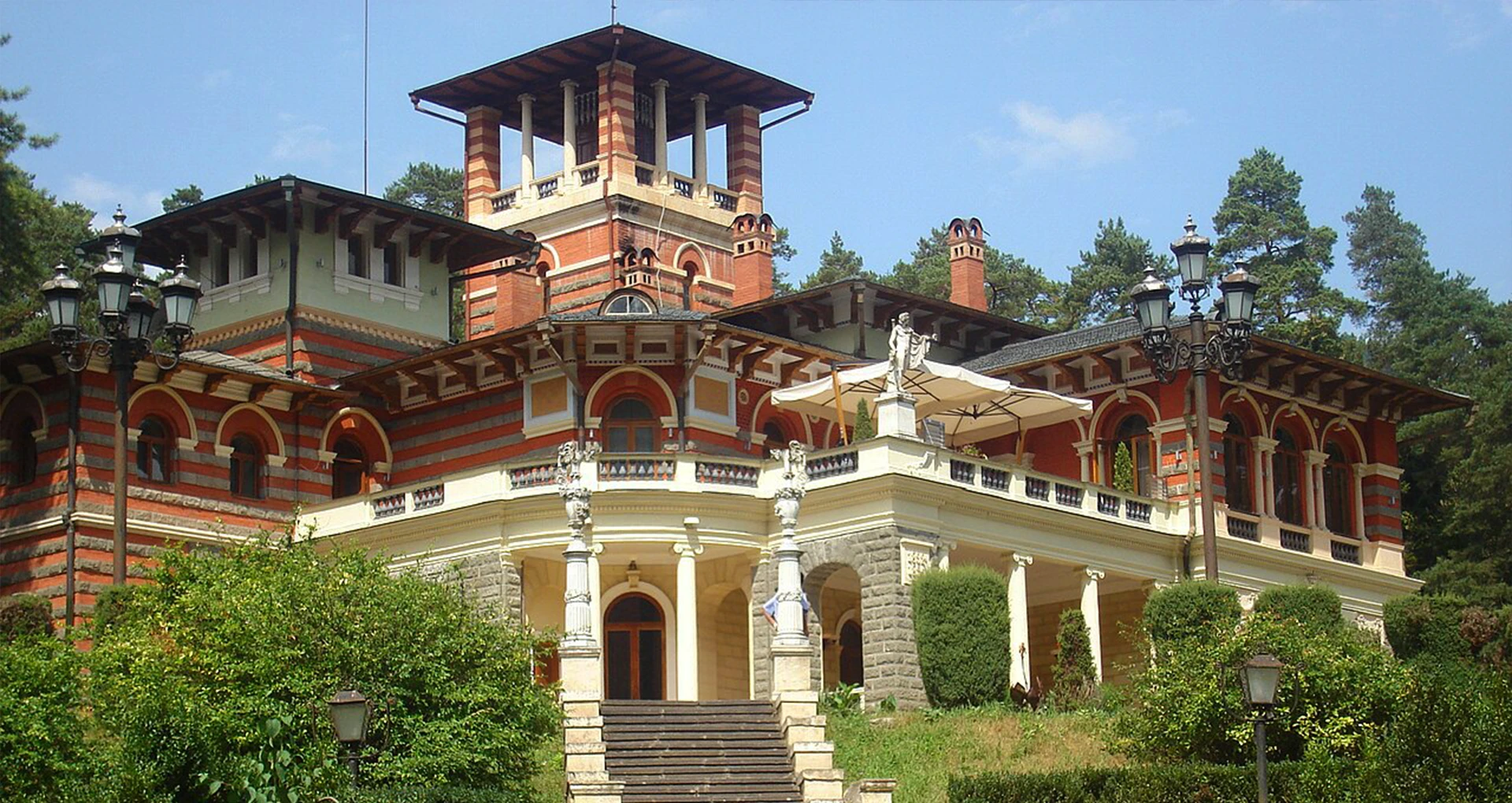
This palace—enclosed by beautiful mountains, situated by the riverbank, enveloped by pine trees and fresh air—is a perfect weekend getaway destination. Its architecture features oriental motifs and is covered in asymmetrical facades and marble statues. It was erected in the 19th century as a summer residence for Grand Duke Nicholas Romanov, partly due to the lung-healing properties of the surrounding evergreen forest. Thus, it was frequented by members of the Romanov family who suffered from tuberculosis. At the time, this area was technologically advanced: the estate was powered by the first hydroelectric power plant in the Russian Empire; a nearby bridge was designed by Gustav Eiffel; and even young Grand Duke George Romanov’s death is associated with innovations—this historic figure ended up crashing in a motorcycle accident on a neighboring mountain road.
The Likani residence has been a favorite summer house for many powerful leaders, including Soviet ones, so it includes historical artifacts from different eras, with legends about historic French and Persian antique furniture.
Currently, you cannot visit the interior of the palace, though you can take a walk in the park and admire the architecture. There is a luxury hotel on the grounds, allowing you to enjoy the premises once strolled by various ruling elites.
The Borjomi Likani Health & Spa Centre: visit website
Mirza Khan Palace in Borjomi
If you decide to take a trip to the Likani Palace, make sure to check out the Mirza Khan Palace as well. It is also known as Villa Firuze (“turquoise”), now turned into a hotel.
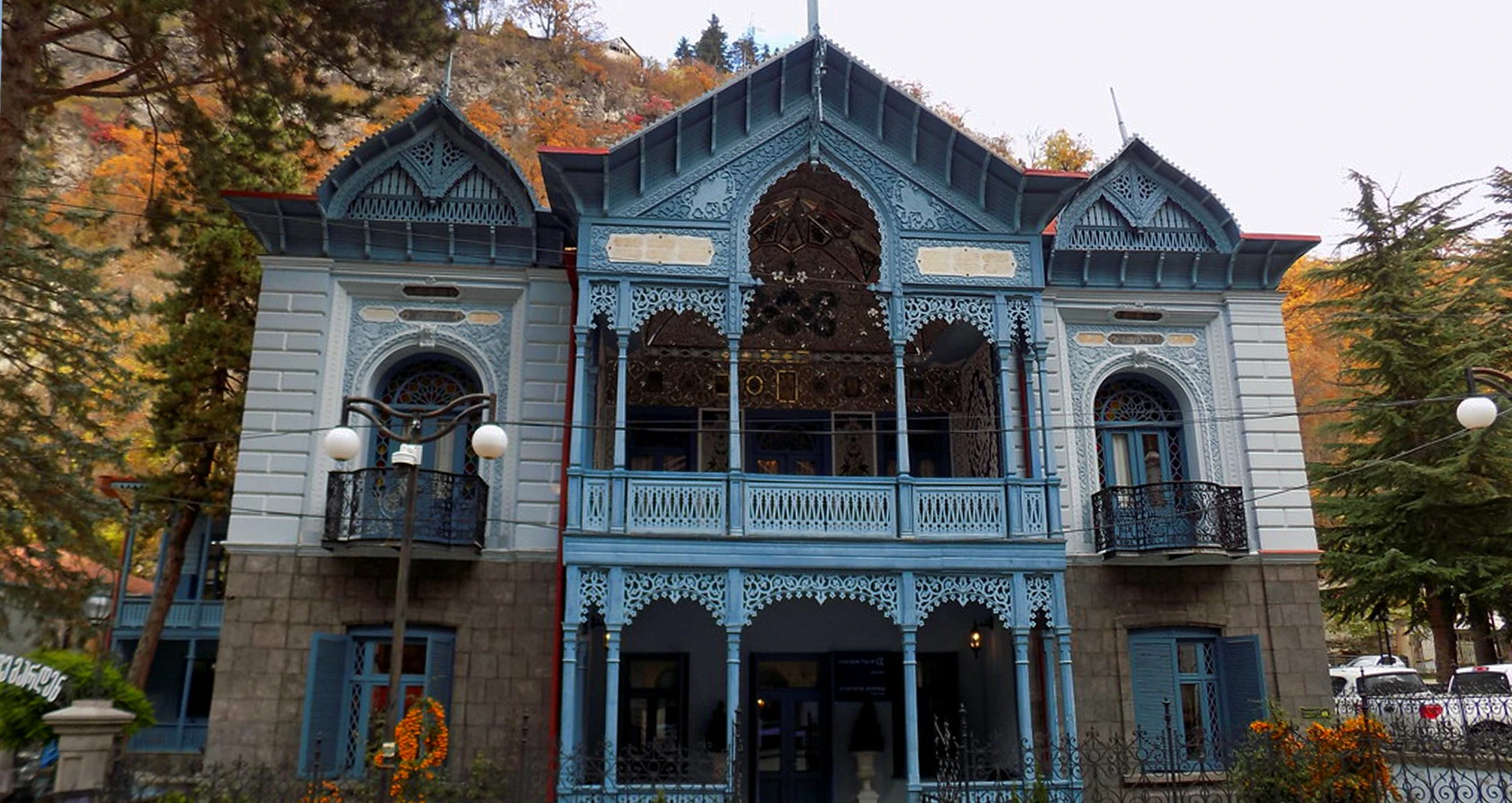
The villa is situated right by the historic park entrance, and you cannot miss it due to its beautiful light-blue color and entrancing Persian-Georgian architecture.
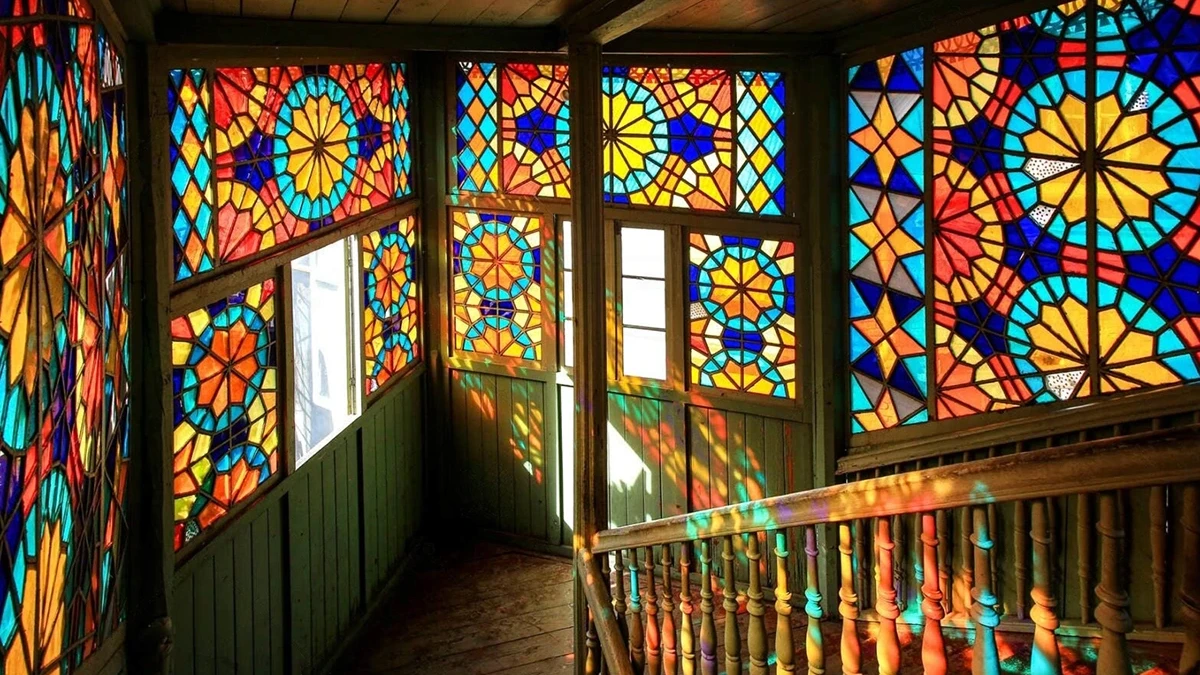
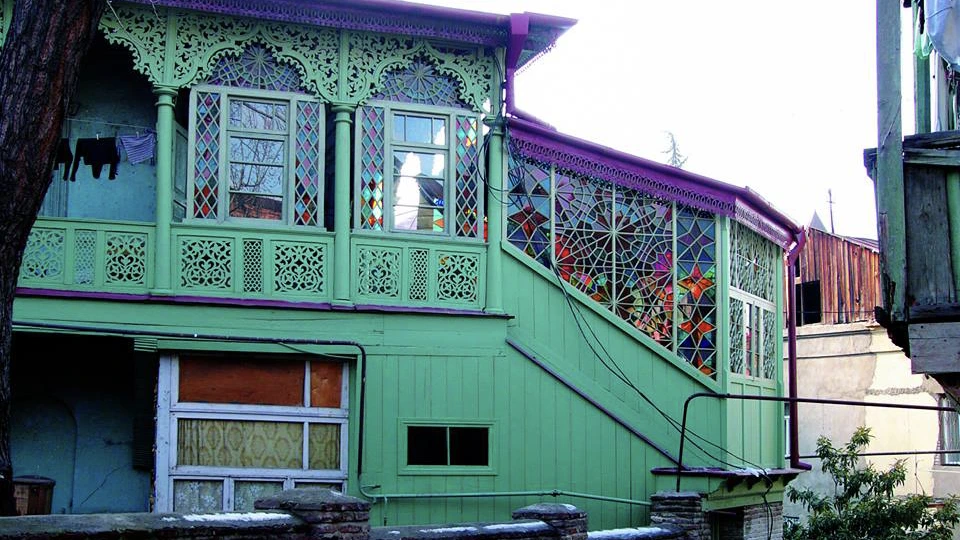
It features intricate wooden details, a little fountain, turquoise walls, colorful glass windows, and mosaic mirrors that magically echo the light and colors—especially on the historic balcony, which can be seen from the street.
The villa was built in the 19th century by a Persian consul as his summer residence. Legend has it that its architect, Yusuf, was lured back to Tbilisi to his family home under false pretenses, where a dervish murdered him and his parents, possibly to extract an architectural secret.
As for the Borjomi historic park, it is perhaps the most famous park in Georgia. The spa and park were first arranged in the mid-19th century, and so was the Borjomi mineral water factory, which has since been moved to a modern facility (though the historic building remains in the park).
As mentioned above, Russian imperial officials began improving and formalizing the area as a health resort.
The mineral waters had been known locally earlier, but from the 19th century, Borjomi started to develop as an organized health destination with landscaped alleys, pavilions, and bathing facilities. Over time, members of the Russian imperial family built residences nearby, reinforcing Borjomi’s status as a fashionable spa town.
Park visitation hours: 9:00 AM to 8:00 PM
Golden Tulip Hotel: visit website
Dadiani Palace in Zugdidi
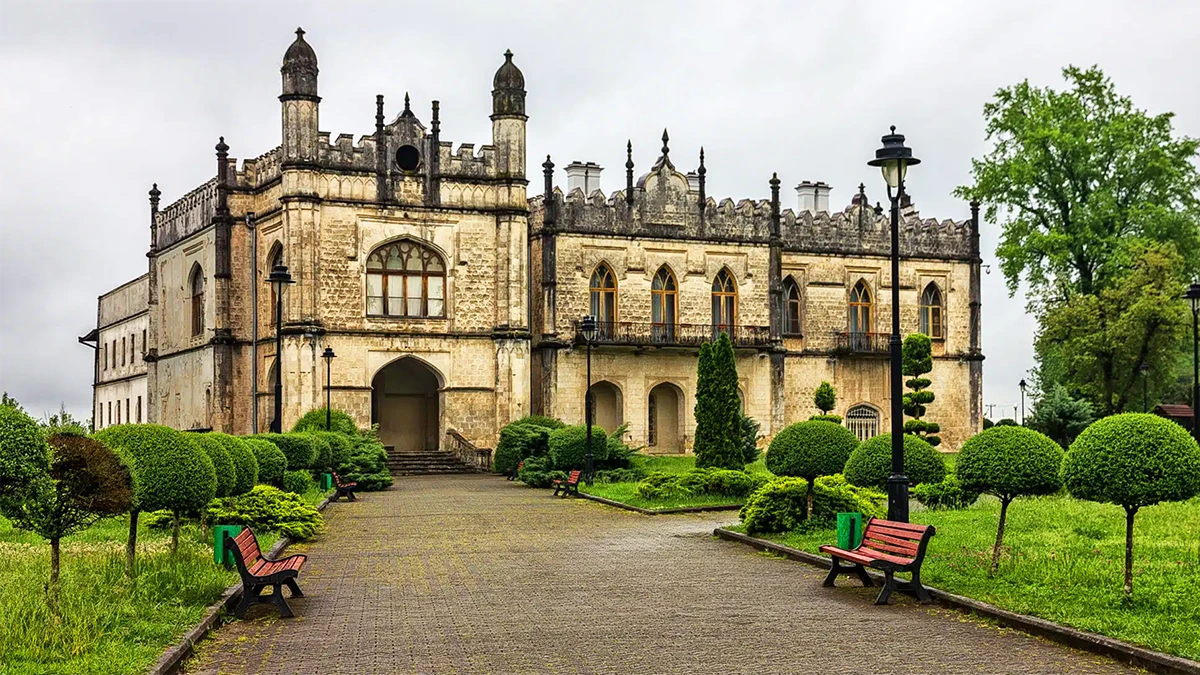
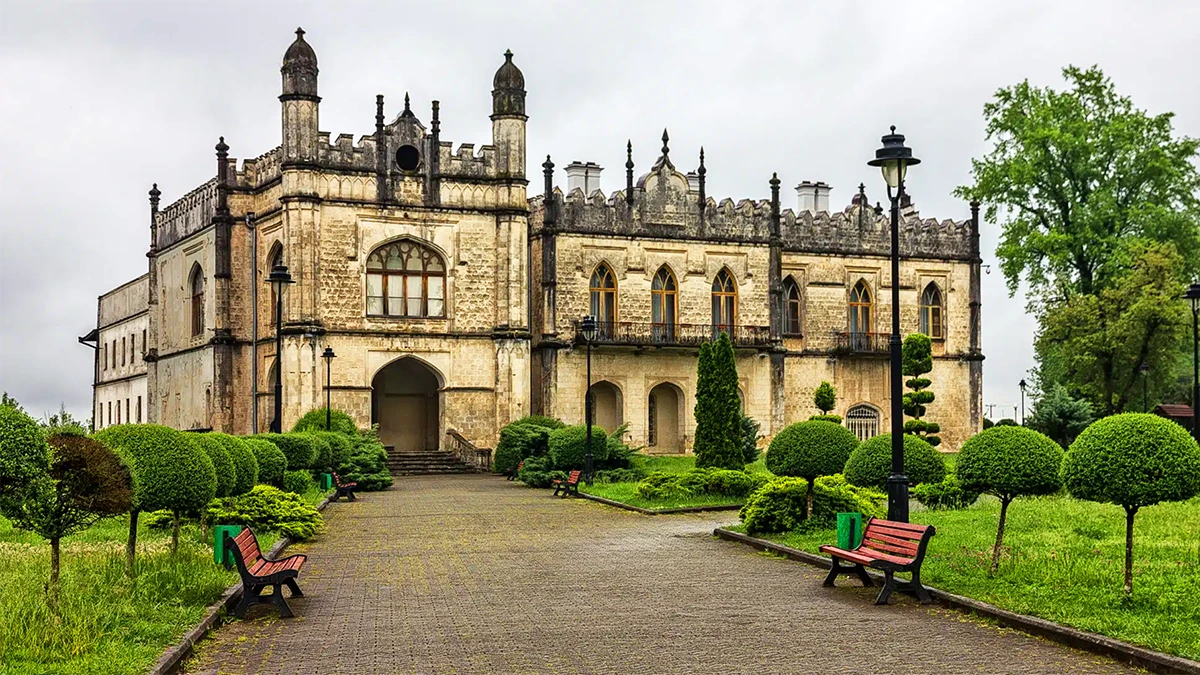
One the most impressive among Georgian palaces, Dadiani Palace stands out due to its neo-Gothic architecture and a historical garden.
Dadiani Palace is a key historical complex in Western Georgia, erected in the 17th–19th centuries and serving as a residence for Dadiani princes. Today, it features historical museums, a church, and a garden.
The palace started out as predominantly neo-Gothic, as it was built under an English architect, with an eclectic mix of Georgian and Islamic elements.
While you visit the museum, you can explore how this noble family (powerful since the 11th century) used to live: the Dadiani Palaces History and Architecture Museum features more than ten thousand historical artifacts, including a death mask of the French conqueror Napoleon Bonaparte and medieval manuscripts and miniatures from the 13th–14th centuries.
The historic Zugdidi Botanical Garden deserves its own tribute.
It was landscaped in the 19th century and designed by Italian and French architects, giving it a very romantic, Georgian-European feel. It includes over 80 species of flora imported from all over the world, from the Mediterranean to Japan.
Magnolia trees alone are represented by 6 species. The garden is accessible to the public, whether you wish to visit it as part of the palace experience or promenade as a separate treat.
Museum hours: 10:00 AM to 6:00 PM
Chateau Mukhrani in Mukhrani
Another fascinating example of Georgian-European architecture lies only 40 minutes away from Tbilisi and provides an excellent opportunity for a day trip.
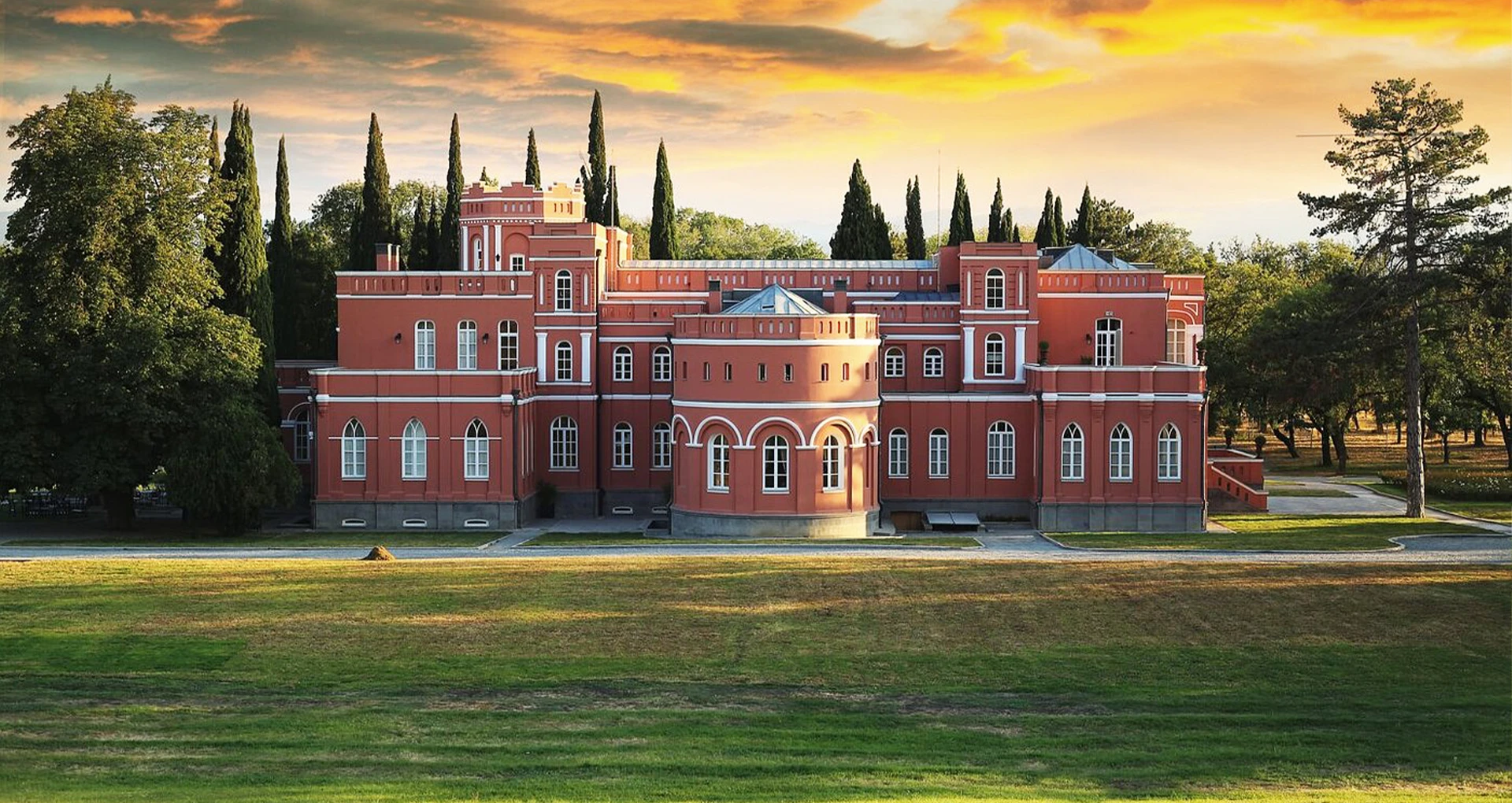
The palace of Mukhrani is a 19th-century residence of Georgian nobility, built for Prince Mukhran-Batoni, a pioneer in modern Georgian winemaking. The House of Mukhrani is a princely branch of the main Georgian royal dynasty, the Bagrationi dynasty.
The palace was designed by a French architect, influenced by the symmetrical and exuberant Versailles.
It was an important meeting point for Georgian elites during our Belle Époque. Since the Mukhrani Palace is a wine estate, it provides wine tastings and guided tours to historical vineyards, cellars, and wine tunnels. It is also a picture-perfect destination for holding beautiful events.
Guided tours and tastings: 11:00 AM to 6:00 PM; restaurant and events by reservation.
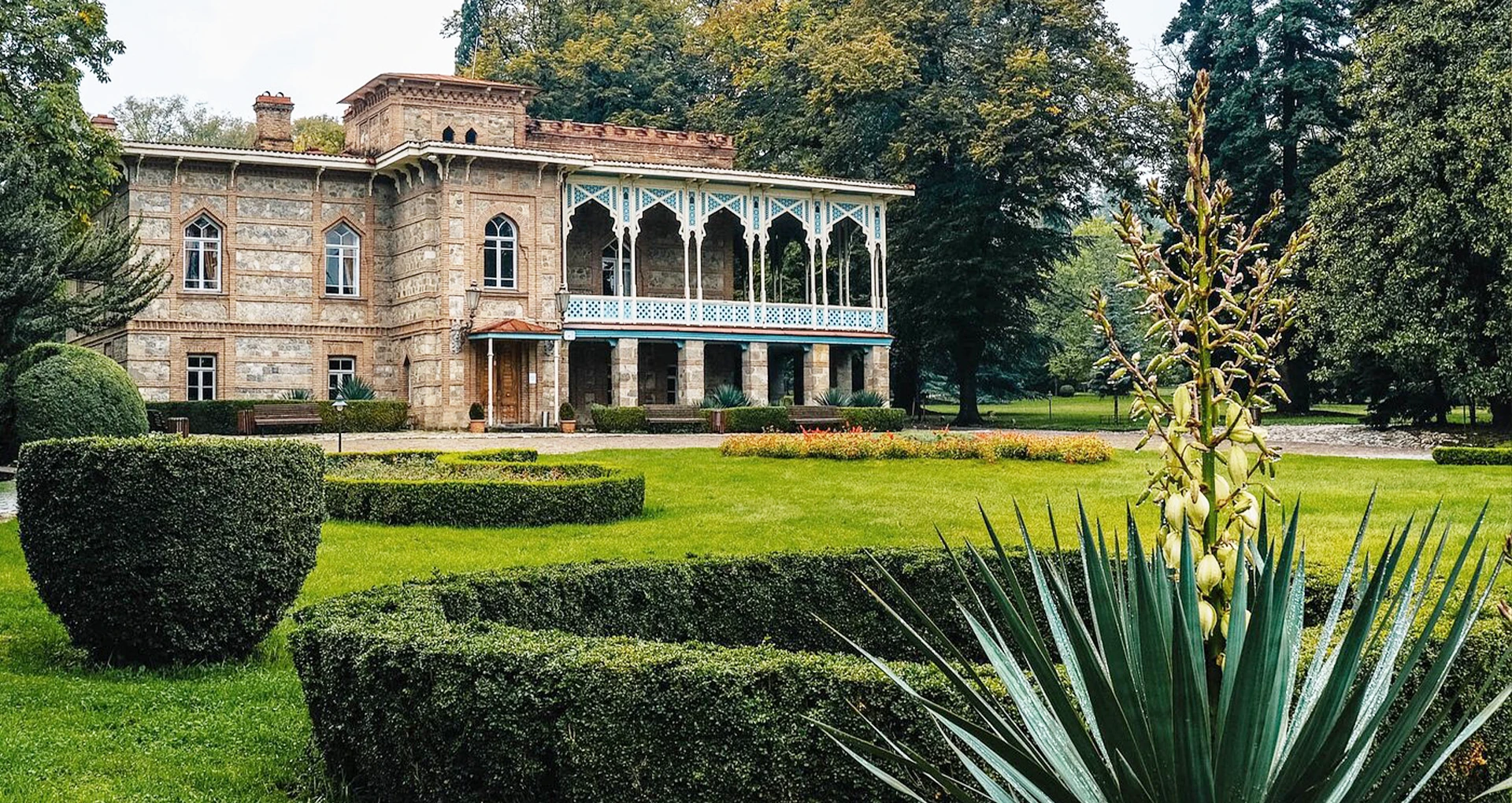
Chavchavadze Palace in Tsinandali
One of the coziest palaces among the bunch is the historic estate of Prince Alexander Chavchavadze.
Located in the village of Tsinandali, a heart of Georgian winemaking, it includes a magnificent garden, a museum, and a historic winery. Tsinandali is about two hours away from Tbilisi, thus providing an excellent overnight experience.
This palace is rich in history. It was built by a noble and a poet, founder of Georgian Romanticism.
The architecture is reminiscent of Italian villas, with 19th-century furnishings, a library, and even the first piano transported to Georgia. The cultural heritage continues nowadays, as the estate often hosts exhibitions and classical music festivals.
You cannot visit the place without paying homage to a historic wine cellar holding over 16,000 bottles (including 1841 Saperavi).
Tsinandali Estate offers guided tours of its historic wine cellar (Oenotheque) and wine tastings as part of museum visits. Plan for at least an hour for this activity.
As for the trees, Tsinandali Palace gardens span 12 hectares and represent Georgia’s first European-style landscaped park—a delight to explore.
The gardens blend European patterns with natural Georgian elements, resembling an English garden in contrast to the French and Italian influences of Dadiani and Mukhrani gardens.
Notable spots feature a “wishing tree” draped in wish ribbons, a maze, and several huge, larger-than-life conifers. The gardens were renovated in 1887 and 2007, earning membership in the European Network of Historic Gardens in 2019.
Museum hours: 10:00 a.m.–6:00 p.m.
We created Memo — a brand where Georgian memories come to life.
Visit Memo By GSH and take a piece of Georgia with you – Www.memories.ge